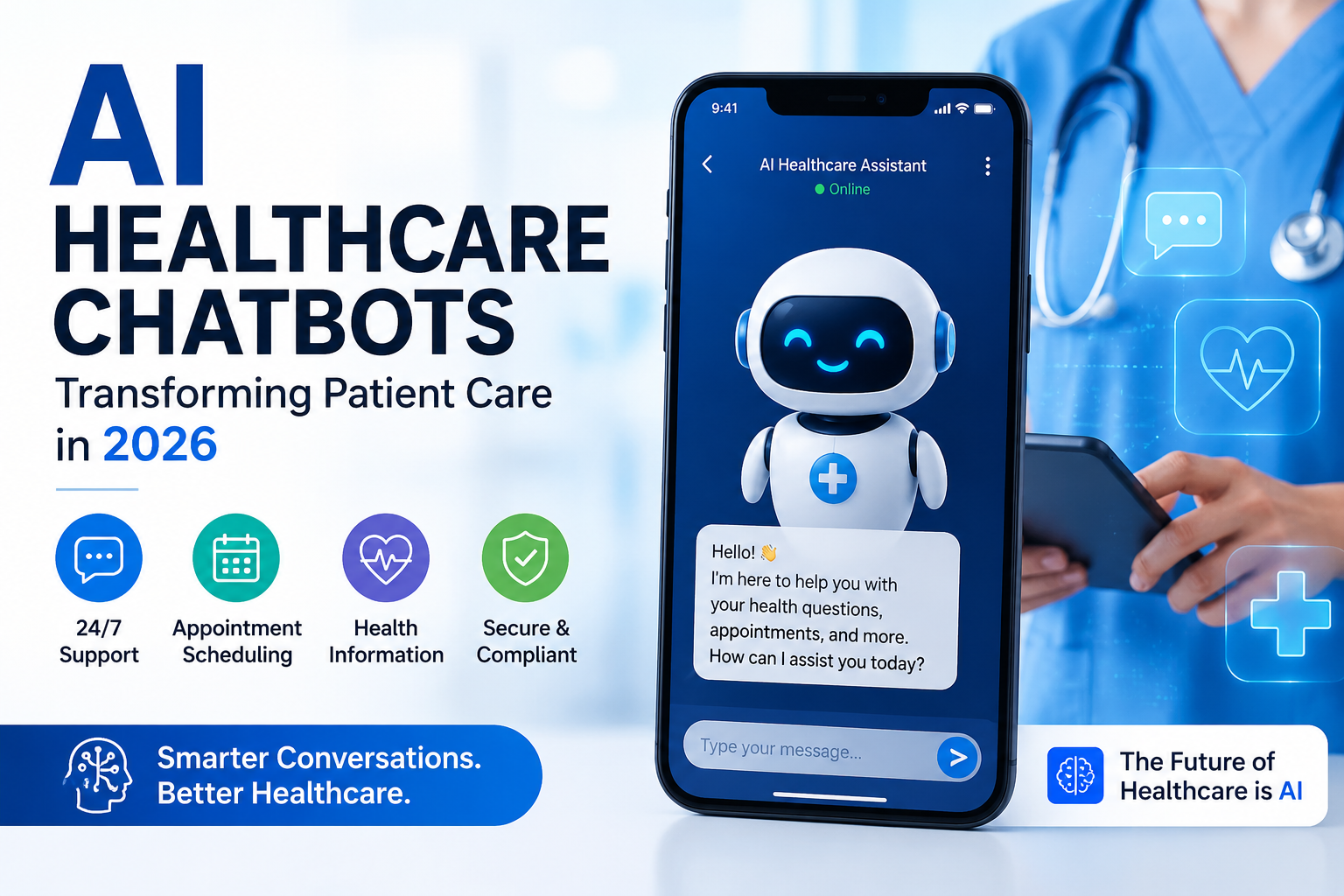
AI Healthcare Chatbots: How AI Is Transforming Patient Care in 2026
Healthcare in the United States is becoming increasingly digital, and artificial intelligence is playing a major role in changing how patients interact with healthcare providers. From answering common questions to helping patients navigate appointments, AI Healthcare Chatbots are making healthcare communication faster, more accessible, and more convenient.
In 2026, hospitals, clinics, telehealth companies, and healthcare organizations are increasingly exploring AI-powered solutions to improve patient experiences while reducing pressure on administrative staff. But what exactly are these chatbots, and how can they benefit the U.S. healthcare industry?
What Are AI Healthcare Chatbots?
AI Healthcare Chatbots are software applications that use artificial intelligence, natural language processing, and machine learning to communicate with patients through text or voice. Unlike traditional chatbots that rely mainly on predefined responses, modern AI systems can understand conversational questions and provide relevant information based on the user’s request.
For example, a patient may ask about appointment availability, medication instructions, symptoms, insurance information, or preparation for a medical test. Depending on how the chatbot is designed, it can provide general information, guide the patient to appropriate resources, or connect them with a healthcare professional.
How AI Healthcare Chatbots Help U.S. Healthcare Providers
The U.S. healthcare system handles millions of patient interactions every day. AI Healthcare Chatbots can help organizations manage some of these routine interactions more efficiently.
1. 24/7 Patient Support
Patients do not always need assistance during traditional business hours. AI Healthcare Chatbots can provide automated support around the clock, allowing patients to get answers to common questions at night, on weekends, or during holidays.
This can be particularly useful for healthcare organizations that receive a high volume of repetitive questions.
2. Appointment Scheduling
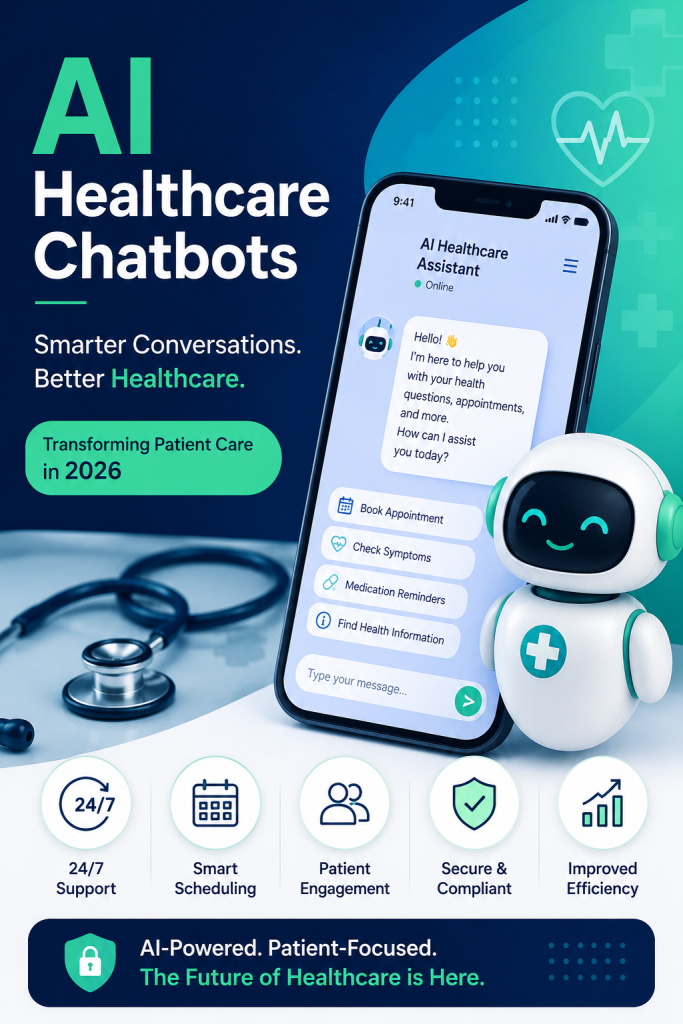
Scheduling appointments can take valuable time for both patients and administrative teams. AI Healthcare Chatbots can assist users with finding available appointment times, collecting basic information, and directing them to the appropriate scheduling system.
This can create a smoother digital experience while reducing the workload associated with routine scheduling requests.
3. Patient Education
Healthcare information can sometimes be difficult for patients to understand. AI Healthcare Chatbots can explain general health information in simpler language and direct users toward trusted healthcare resources.
However, chatbots should not replace qualified medical professionals when patients require diagnosis, treatment decisions, or emergency care.
4. Symptom Guidance
Some AI Healthcare Chatbots can help users understand what type of healthcare service may be appropriate based on symptoms they describe. For example, a chatbot might recommend contacting a primary care provider, visiting an urgent care facility, or seeking emergency assistance when appropriate.
These tools should be designed with strong safety measures and clearly communicate their limitations.
Benefits of AI Healthcare Chatbots
There are several potential benefits associated with implementing AI Healthcare Chatbots in healthcare organizations.
First, they can improve accessibility by giving patients another way to interact with healthcare providers. Second, they can reduce repetitive administrative work, allowing staff to focus on more complex patient needs. Third, automated systems can provide consistent responses to frequently asked questions.
For patients, the biggest advantage may be convenience. Instead of waiting on hold or searching through multiple pages of a healthcare website, patients can interact with an AI-powered assistant using natural language.
Privacy and Security Considerations
Healthcare organizations must take privacy and security seriously when implementing AI Healthcare Chatbots. Patient information can be highly sensitive, so organizations need appropriate safeguards for data collection, storage, access, and transmission.
For U.S. healthcare providers, compliance considerations such as HIPAA can be particularly important when protected health information is involved. Organizations should carefully evaluate how an AI chatbot handles patient data and whether appropriate security controls are in place.
The Future of AI Healthcare Chatbots in 2026 and Beyond
The future of AI Healthcare Chatbots is likely to involve deeper integration with digital healthcare platforms, patient portals, telehealth services, and electronic health record systems.
As AI technology becomes more capable, healthcare organizations may use chatbots for increasingly sophisticated administrative and informational tasks. However, successful implementation will depend on balancing automation with human oversight.
The goal should not be to eliminate human interaction. Instead, AI Healthcare Chatbots can help healthcare professionals spend less time on repetitive tasks and more time providing personalized care.
Are AI Healthcare Chatbots Right for Your Organization?
For hospitals, clinics, telehealth companies, and other healthcare businesses, AI Healthcare Chatbots can be a valuable addition to a broader digital healthcare strategy. They can improve communication, provide faster support, and help streamline routine processes.
However, healthcare organizations should choose solutions carefully. Security, accuracy, integration capabilities, patient experience, compliance, and human escalation options should all be considered before implementation.
Conclusion
AI Healthcare Chatbots are becoming an important part of the digital healthcare landscape in the United States. In 2026, these AI-powered assistants can help patients access information, manage routine interactions, and navigate healthcare services more conveniently.
While they cannot replace doctors, nurses, or other healthcare professionals, AI Healthcare Chatbots can complement human care by handling repetitive tasks and providing patients with accessible digital support. As technology continues to evolve, healthcare providers that adopt AI responsibly may be better positioned to deliver faster, more convenient, and patient-centered experiences.