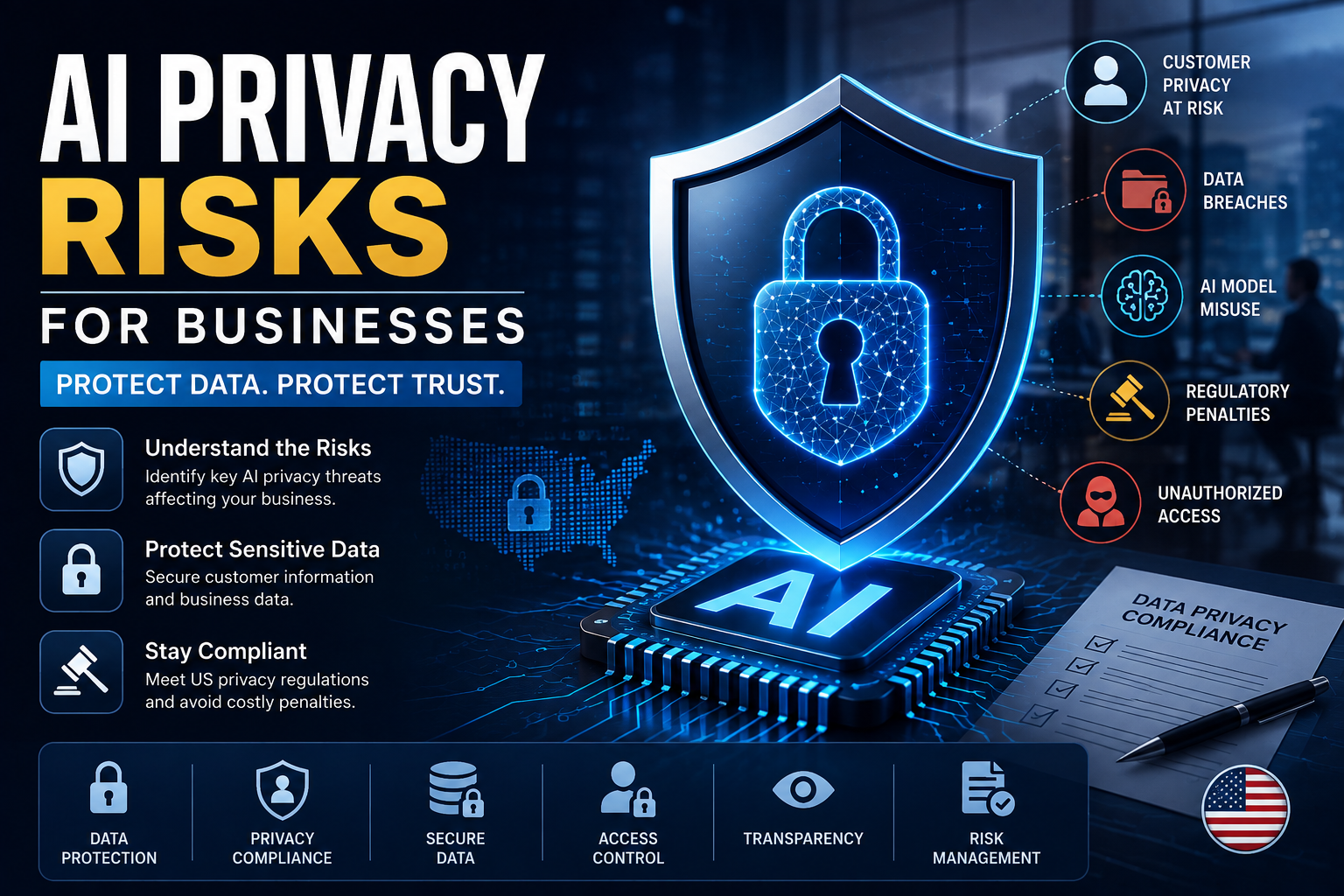
AI Privacy Risks for Businesses: How to Protect Sensitive Data in 2026
Artificial intelligence (AI) is transforming how businesses operate, from customer service and marketing to data analysis and automation. While AI offers remarkable benefits, it also introduces significant privacy concerns. Understanding AI Privacy Risks for Businesses is essential for protecting customer information, maintaining regulatory compliance, and building trust in today’s digital economy.
Whether you’re a startup, small business, or large enterprise in the United States, learning about AI Privacy Risks for Businesses can help you reduce security vulnerabilities and prepare for the future of AI in 2026.
What Are AI Privacy Risks for Businesses?
AI Privacy Risks for Businesses refer to the potential threats that arise when AI systems collect, process, store, or analyze sensitive personal and business data. AI models often rely on massive datasets to improve performance, making data privacy one of the biggest concerns for organizations.
Without proper safeguards, businesses may expose confidential information, violate privacy laws, or suffer costly cyberattacks.
Why AI Privacy Matters
As organizations increasingly adopt AI technologies, protecting sensitive information has become a top priority. Ignoring AI Privacy Risks for Businesses can result in financial losses, legal penalties, and reputational damage.
Some common privacy concerns include:
- Unauthorized access to customer data
- Data breaches
- AI model misuse
- Employee data exposure
- Third-party data sharing
- Identity theft
- Compliance violations
- Loss of customer trust
Addressing these issues early helps businesses create a secure AI environment.
Common AI Privacy Risks for Businesses
1. Data Breaches
One of the biggest AI Privacy Risks for Businesses is unauthorized access to sensitive data. Cybercriminals often target AI systems because they contain valuable customer information, financial records, and proprietary business data.
Businesses should encrypt sensitive information and monitor access continuously.
2. AI Model Data Leakage
AI models can unintentionally reveal confidential information if they are trained on sensitive datasets without proper privacy controls.
Organizations should carefully manage training data and remove personally identifiable information (PII) whenever possible.
3. Third-Party AI Tools
Many companies rely on external AI platforms to improve productivity. However, uploading confidential documents to third-party AI services can create additional AI Privacy Risks for Businesses.
Always review vendor security policies before sharing sensitive information.
4. Employee Misuse
Employees may unknowingly expose confidential business information by entering proprietary data into public AI tools.
Regular cybersecurity awareness training helps reduce human error and protects company assets.
5. Regulatory Compliance Challenges
Businesses operating in the United States must comply with privacy regulations such as state privacy laws and industry-specific standards.
Following compliance requirements reduces legal risks and improves customer confidence.
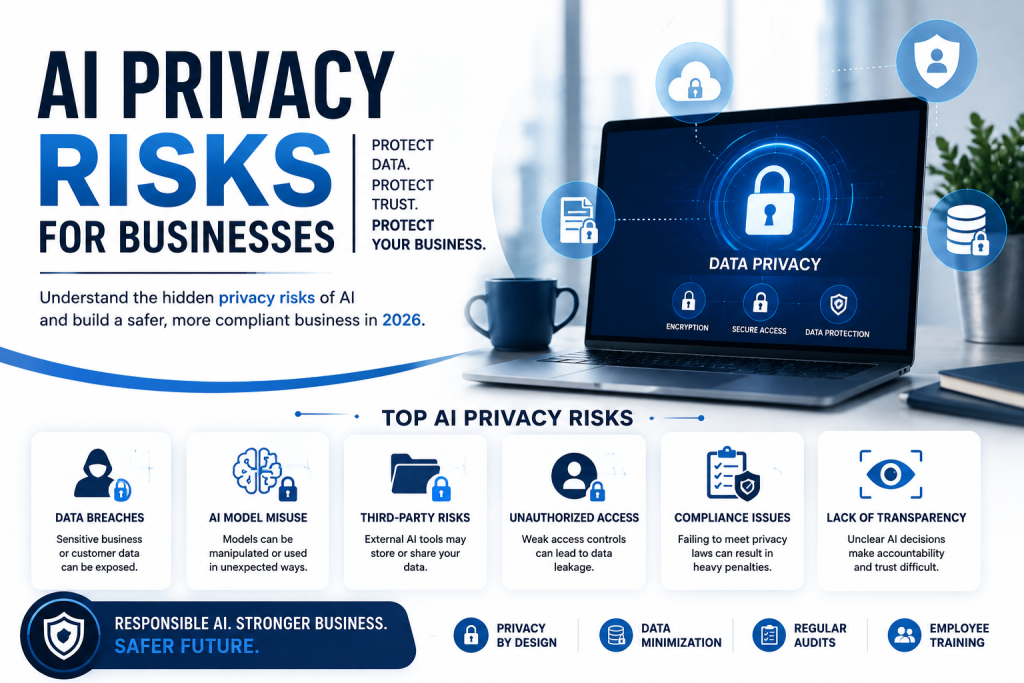
Best Practices to Reduce AI Privacy Risks
Organizations can minimize AI Privacy Risks for Businesses by implementing strong privacy and security measures.
Protect Sensitive Data
Encrypt customer information both during transmission and while stored.
Limit Data Collection
Only collect the information necessary for business operations.
Implement Access Controls
Use Multi-Factor Authentication (MFA) and Role-Based Access Control (RBAC) to restrict access to sensitive systems.
Audit AI Systems Regularly
Monitor AI models for unusual behavior and review privacy controls on a routine basis.
Train Employees
Educate staff about AI privacy, phishing attacks, and responsible AI usage.
Choose Trusted AI Vendors
Partner with AI providers that prioritize security, transparency, and regulatory compliance.
Benefits of Strong AI Privacy Protection
Businesses implementing effective privacy strategies gain several competitive advantages.
Key benefits include:
- Increased customer trust
- Better regulatory compliance
- Reduced risk of data breaches
- Stronger cybersecurity
- Improved brand reputation
- Lower financial risks
- Safer AI adoption
- Enhanced business resilience
These advantages make privacy protection a critical investment for organizations using AI.
Industries Most Affected
Several industries face higher AI Privacy Risks for Businesses because they process sensitive customer information.
These industries include:
- Healthcare
- Financial Services
- E-commerce
- Insurance
- Education
- Legal Services
- Government
- Human Resources
- Retail
- Technology
Businesses in these sectors should implement advanced privacy controls to protect sensitive information.
The Future of AI Privacy in 2026
As AI technology continues to evolve, organizations must strengthen their privacy strategies. Future trends related to AI Privacy Risks for Businesses include:
- Privacy-preserving AI
- Federated learning
- Zero Trust security
- AI governance frameworks
- Automated compliance monitoring
- Secure AI model development
- Advanced encryption technologies
Companies that invest in responsible AI practices today will be better prepared for tomorrow’s regulatory and cybersecurity challenges.
Final Thoughts
Understanding AI Privacy Risks for Businesses is essential for any organization using artificial intelligence. From protecting customer information and preventing data breaches to maintaining regulatory compliance, strong privacy practices help businesses safely adopt AI technologies.
As AI becomes more integrated into everyday operations throughout 2026, organizations that prioritize privacy, transparency, and cybersecurity will earn greater customer trust and achieve long-term success.
Frequently Asked Questions
What are AI Privacy Risks for Businesses?
AI Privacy Risks for Businesses are threats related to the collection, storage, processing, and sharing of sensitive information by AI systems, potentially leading to data breaches, compliance issues, and unauthorized access.
Why is AI privacy important?
AI privacy protects customer information, ensures compliance with regulations, prevents cyberattacks, and helps businesses maintain trust and credibility.
How can businesses reduce AI privacy risks?
Businesses can encrypt sensitive data, limit data collection, implement access controls, audit AI systems regularly, train employees, and use trusted AI vendors.
Which industries face the highest AI privacy risks?
Healthcare, finance, e-commerce, education, legal services, government, retail, and technology organizations often handle sensitive data and require stronger AI privacy protections.