AI Compliance Automation in 2026: Smarter Regulatory Compliance
Regulatory compliance is becoming more complex as organizations manage increasing amounts of data, changing regulations, cybersecurity requirements, privacy obligations, and internal controls. In 2026, artificial intelligence is helping businesses simplify these responsibilities through automated compliance technology.
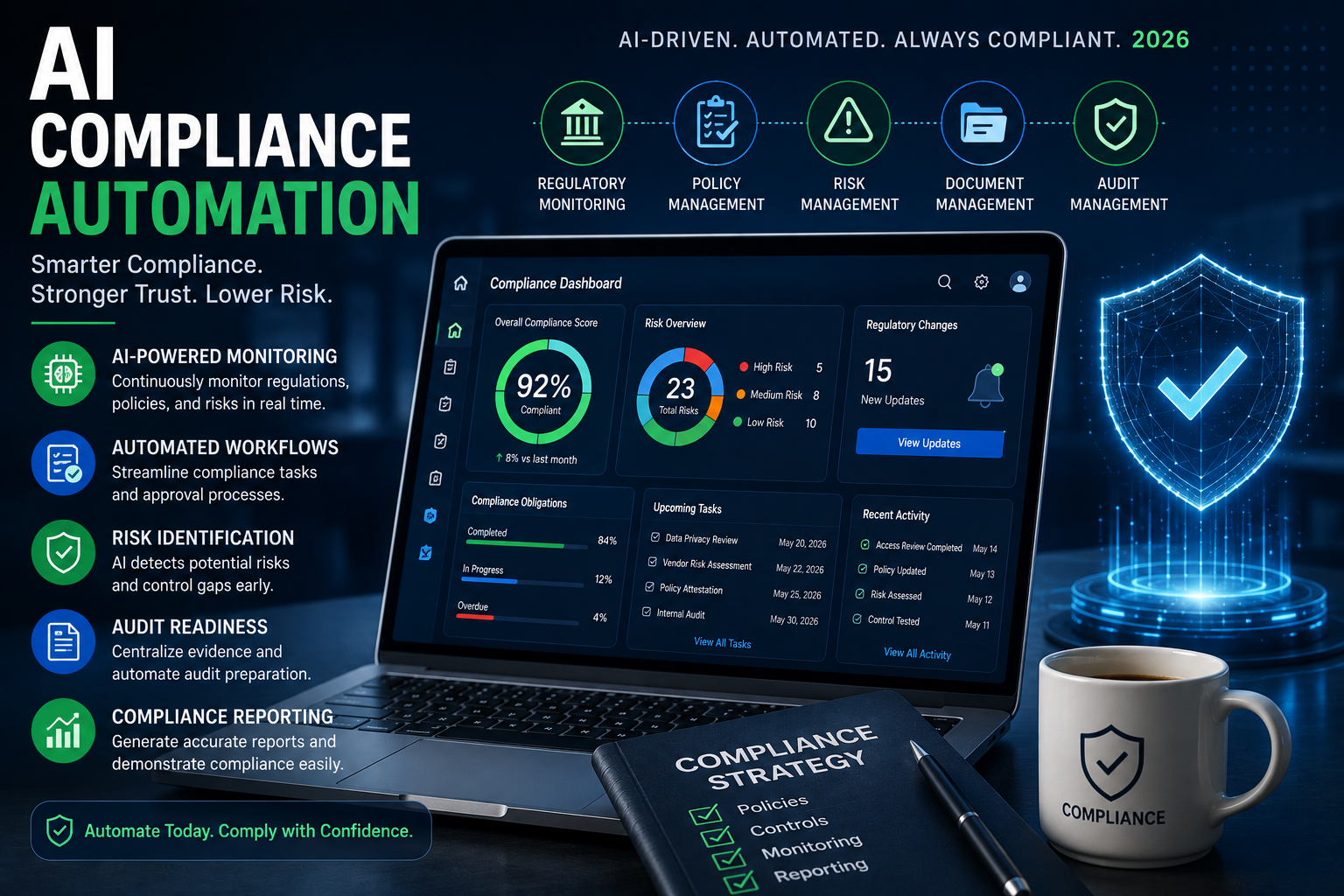
AI Compliance Automation combines artificial intelligence, machine learning, workflow automation, and data analysis to help organizations monitor regulatory requirements, identify potential risks, manage documentation, and streamline compliance processes.
For companies operating across highly regulated industries, automation can reduce repetitive manual work while improving visibility into compliance activities.
What Is AI Compliance Automation?
AI Compliance Automation refers to technology that uses intelligent systems to automate different parts of the compliance lifecycle.
Traditional compliance programs often depend on spreadsheets, manual reviews, emails, scheduled audits, and employees checking regulatory updates. These approaches can consume significant time and may create opportunities for human error.
Modern AI Compliance Automation compliance platforms can continuously analyze information, identify potential issues, organize evidence, and notify relevant teams when action may be required.
Why Compliance Automation Matters in 2026
Businesses face a constantly changing regulatory environment. Requirements related to data privacy, financial services, cybersecurity, consumer protection, and corporate governance can change over time.
Keeping up manually can become difficult, particularly for organizations with multiple departments or operations in different jurisdictions.
Automated compliance tools can help businesses:
- Monitor regulatory requirements
- Identify compliance risks
- Track internal controls
- Organize documentation
- Manage audit evidence
- Automate compliance workflows
- Generate reports
- Monitor policy requirements
- AI Compliance Automation
This allows compliance teams to focus more attention on strategic risk management rather than repetitive administrative tasks.
Key Features of AI Compliance Automation
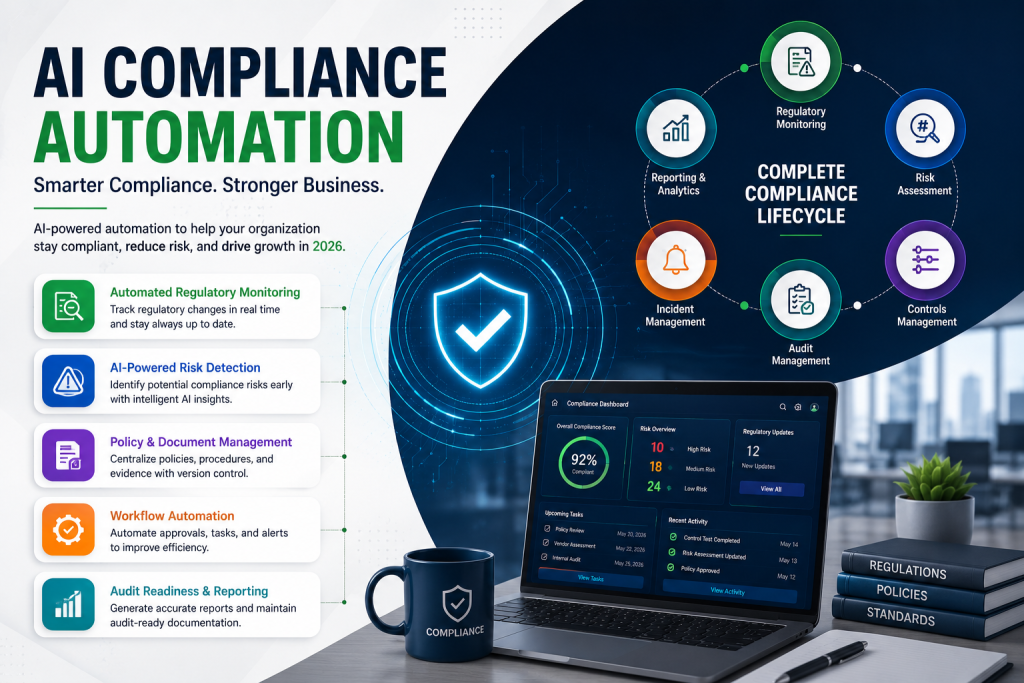
1. Automated Regulatory Monitoring
One of the most useful capabilities is regulatory monitoring. Intelligent systems can analyze regulatory information and help organizations identify changes that may affect their policies or processes.
Instead of manually reviewing large amounts of information, compliance teams can receive relevant alerts and prioritize areas that require attention.
2. Risk Identification
AI-powered compliance systems can analyze business information to identify unusual patterns, potential control weaknesses, and areas of increased risk.
Risk scoring can help compliance professionals determine which issues deserve immediate investigation.
3. Automated Documentation
Compliance requires extensive documentation. Organizations may need policies, procedures, control records, audit evidence, employee certifications, and other supporting materials.
Automation can organize these documents and make evidence easier to locate when needed.
4. Continuous Compliance Monitoring
Traditional compliance assessments may occur periodically. Automated platforms can provide continuous monitoring instead.
This approach gives organizations better visibility into potential issues between formal audits and assessments.
5. Audit Preparation
Preparing for an audit can require significant coordination. Teams often need to collect evidence from multiple systems and departments.
Compliance automation can centralize relevant records and create organized audit trails, making preparation more efficient.
Benefits for Businesses
The primary advantage of automated compliance technology is efficiency. Employees spend less time performing repetitive tasks and more time evaluating meaningful risks.
Other potential benefits include:
- Reduced administrative workload
- Faster risk identification
- Better documentation
- Improved audit readiness
- Consistent compliance workflows
- Greater visibility
- Reduced human error
- Scalable compliance operations
For growing organizations, scalability is especially important because compliance requirements can increase as the business expands.
AI Compliance Automation and Data Privacy
Data privacy is another important area where intelligent compliance technology can provide value.
Organizations often manage customer information, employee records, financial data, and other sensitive information. Automated systems can help monitor data-handling practices and identify potential policy violations.
Privacy compliance workflows may include access monitoring, policy management, consent tracking, data classification, and documentation.
However, organizations should ensure that automated systems themselves follow appropriate security and privacy practices.
How AI Improves Compliance Risk Management
Artificial intelligence can analyze large datasets much faster than manual processes. This capability allows organizations to identify patterns and potential risks earlier.
For example, an intelligent platform may detect unusual activity within a control environment or identify documentation that appears incomplete.
AI does not replace compliance professionals. Instead, it provides tools that help professionals make faster, data-driven decisions.
Human oversight remains essential, particularly when compliance decisions involve complex legal or regulatory interpretations.
Industries That Can Benefit
Compliance automation can support organizations across many industries, including:
- Financial services
- Healthcare
- Insurance
- Technology
- E-commerce
- Telecommunications
- Manufacturing
- Professional services
- AI Compliance Automation
Organizations with complex regulatory requirements can particularly benefit from centralized monitoring and automated workflows.
Choosing the Right Compliance Automation Platform
Businesses should evaluate several factors before selecting a solution.
Important considerations include data security, integration capabilities, reporting functionality, regulatory coverage, workflow customization, scalability, and ease of use.
A strong platform should integrate with existing business systems rather than creating another isolated source of information.
Organizations should also consider whether the technology provides clear audit trails and human review capabilities.
The Future of Compliance Technology
The future of compliance management will likely involve increasingly intelligent systems that can monitor risks, interpret regulatory information, automate workflows, and provide predictive insights.
As organizations adopt more artificial intelligence across their operations, compliance teams will also need governance frameworks for responsible AI use.
The combination of automation and human expertise can create a more proactive approach to regulatory risk.
Conclusion
AI Compliance Automation is becoming an important part of modern compliance strategies in 2026. By automating regulatory monitoring, risk identification, documentation, continuous monitoring, and audit preparation, businesses can improve efficiency while maintaining stronger oversight.
Organizations that adopt intelligent compliance technology thoughtfully can reduce repetitive work, improve visibility, and build more scalable compliance programs. The most effective approach combines advanced automation with experienced compliance professionals and strong governance.