Tag: AI for E-Commerce

  • AI Product Recommendations: How AI Is Transforming Online Shopping in 2026

    AI Product Recommendations: How AI Is Transforming Online Shopping in 2026

    AI Product Recommendations: How AI Is Transforming Online Shopping in 2026

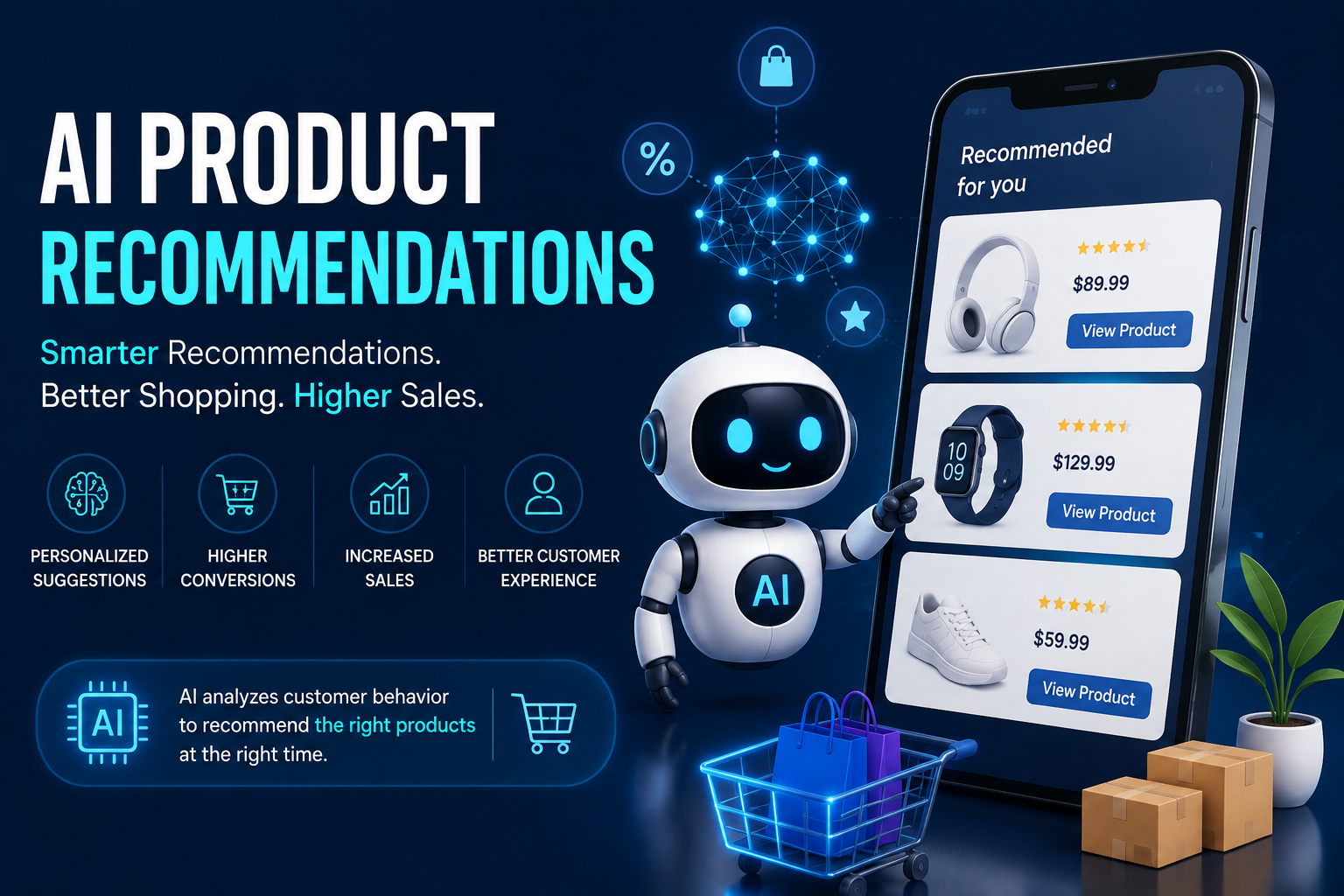
    Online shoppers today expect more than a basic product catalog. They want stores to understand their needs, show relevant products, and help them make purchasing decisions quickly. AI Product Recommendations are helping e-commerce businesses deliver this personalized experience by analyzing customer behavior and using artificial intelligence to suggest products that match individual interests.

    For U.S. e-commerce businesses, AI Product Recommendations can improve product discovery, customer engagement, and potentially increase average order value. From Shopify stores and Amazon sellers to large online retailers, AI-powered recommendation technology is becoming an important part of modern digital commerce.

    What Are AI Product Recommendations?

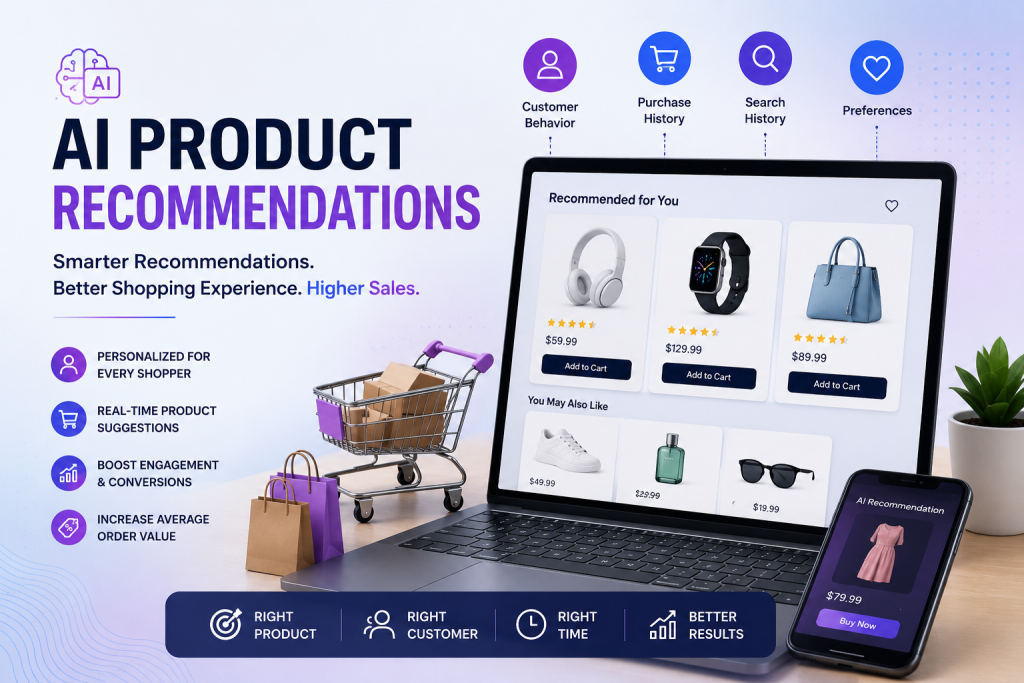
    AI Product Recommendations are personalized product suggestions generated by artificial intelligence and machine learning systems. Instead of showing every customer the same products, AI analyzes different signals to determine which products may be most relevant to each shopper.

    These signals can include:

    • Browsing history
    • Previous purchases
    • Search queries
    • Product views
    • Shopping cart activity
    • Customer preferences
    • Similar customer behavior
    • Product popularity

    The system uses these signals to create personalized recommendations in real time.

    How Do AI Product Recommendations Work?

    Modern AI Product Recommendations typically use machine learning algorithms to analyze large amounts of customer and product data.

    For example, if a shopper frequently views running shoes, fitness clothing, and sports accessories, an AI system may recommend related products such as running socks, fitness trackers, or workout apparel.

    The more relevant data the system receives, the better it can understand shopping patterns and generate useful recommendations.

    Why AI Product Recommendations Matter for E-Commerce

    One of the biggest advantages of AI Product Recommendations is personalization.

    Customers no longer have to scroll through hundreds of products to find something relevant. AI can automatically highlight products based on their interests.

    For businesses, this can lead to:

    • Better product discovery
    • Higher customer engagement
    • Increased conversion opportunities
    • Larger average order values
    • Improved customer experiences
    • More relevant marketing

    Personalization is especially important in the competitive U.S. e-commerce market, where shoppers have many choices.

    1. Personalized Product Discovery

    AI Product Recommendations help shoppers discover products they may not have found through traditional search.

    For example, an online fashion store can recommend matching shoes, accessories, or clothing based on the product a customer is viewing.

    This creates a more personalized shopping journey and helps customers discover complementary products.

    2. Increased Average Order Value

    Businesses can use AI Product Recommendations to suggest complementary or related products during the shopping process.

    For example, an electronics retailer selling a laptop could recommend:

    • Laptop accessories
    • Wireless mice
    • External storage
    • Laptop stands
    • Protective cases

    Relevant recommendations can encourage customers to add additional products to their carts.

    3. Better Customer Experience

    Shoppers want convenient experiences. AI Product Recommendations reduce the effort required to find relevant products.

    Instead of manually searching through different categories, customers can receive personalized suggestions based on their interests and previous interactions.

    This makes online shopping faster and easier.

    4. Smarter Email Marketing

    E-commerce businesses can also use AI Product Recommendations in email campaigns.

    Instead of sending identical product promotions to every subscriber, businesses can personalize emails based on individual shopping behavior.

    For example, a customer who recently purchased running shoes might receive recommendations for fitness accessories rather than unrelated products.

    5. Real-Time Recommendations

    One major advantage of AI is its ability to respond to changing customer behavior.

    If a shopper suddenly starts searching for home office equipment, the recommendation system can adjust its suggestions accordingly.

    This makes AI Product Recommendations more dynamic than traditional recommendation systems based only on static customer profiles.
    Benefits for Small and Large Businesses

    AI Product Recommendations aren’t limited to large technology companies. Small and medium-sized e-commerce businesses can also use AI-powered recommendation tools.

    Potential benefits include:

    • Automated personalization
    • Improved customer engagement
    • Better product discovery
    • Increased cross-selling opportunities
    • More efficient marketing
    • Data-driven customer insights

    As AI tools become more accessible, businesses of different sizes can incorporate recommendation technology into their online stores.

    Challenges of AI Product Recommendations

    Although AI Product Recommendations offer significant benefits, businesses must also consider privacy, data security, accuracy, and transparency.

    Recommendation systems depend on customer data, so companies should handle information responsibly and follow applicable privacy requirements.

    Businesses should also monitor recommendations to ensure AI systems do not repeatedly suggest irrelevant or unavailable products.

    Future of AI Product Recommendations in 2026

    The future of AI Product Recommendations is becoming increasingly intelligent. AI agents and shopping assistants may eventually understand customer preferences, budgets, product requirements, and purchasing intent in greater detail.

    Instead of simply recommending products, AI systems could help shoppers compare options, answer questions, identify alternatives, and guide them through the entire purchasing journey.

    For U.S. retailers, this creates an opportunity to build more personalized and efficient shopping experiences.

    Final Thoughts

    AI Product Recommendations are changing how online retailers connect shoppers with products. By analyzing customer behavior, preferences, and real-time interactions, AI can provide more relevant product suggestions while helping businesses improve engagement and sales opportunities.

    From personalized storefronts and email campaigns to cross-selling and intelligent shopping assistants, the technology has applications across almost every part of e-commerce.

    As competition in online retail continues to grow in 2026, businesses that use AI responsibly and focus on genuine customer value can create more convenient shopping experiences and build stronger relationships with their customers.

    Frequently Asked Questions

    What are AI Product Recommendations?

    AI Product Recommendations are personalized product suggestions generated using artificial intelligence and customer behavior data.

    How do AI recommendations increase sales?

    They can help customers discover relevant products, encourage complementary purchases, and create personalized shopping experiences that may improve conversion opportunities.

    Are AI recommendations useful for small businesses?

    Yes. Small e-commerce businesses can use AI recommendation tools to personalize product discovery, improve cross-selling, and automate parts of their marketing.

    Are AI Product Recommendations accurate?

    Accuracy depends on the quality of the data, algorithms, product catalog, and implementation. Businesses should continuously monitor and optimize their recommendation systems.

    What is the future of AI recommendations?

    AI recommendations are moving toward more conversational and intelligent shopping experiences, where AI assistants can understand customer intent and provide personalized product guidance.
  • How AI Is Changing E-Commerce: The Future of Online Shopping in 2026

    How AI Is Changing E-Commerce: The Future of Online Shopping in 2026

    How AI Is Changing E-Commerce: The Future of Online Shopping in 2026

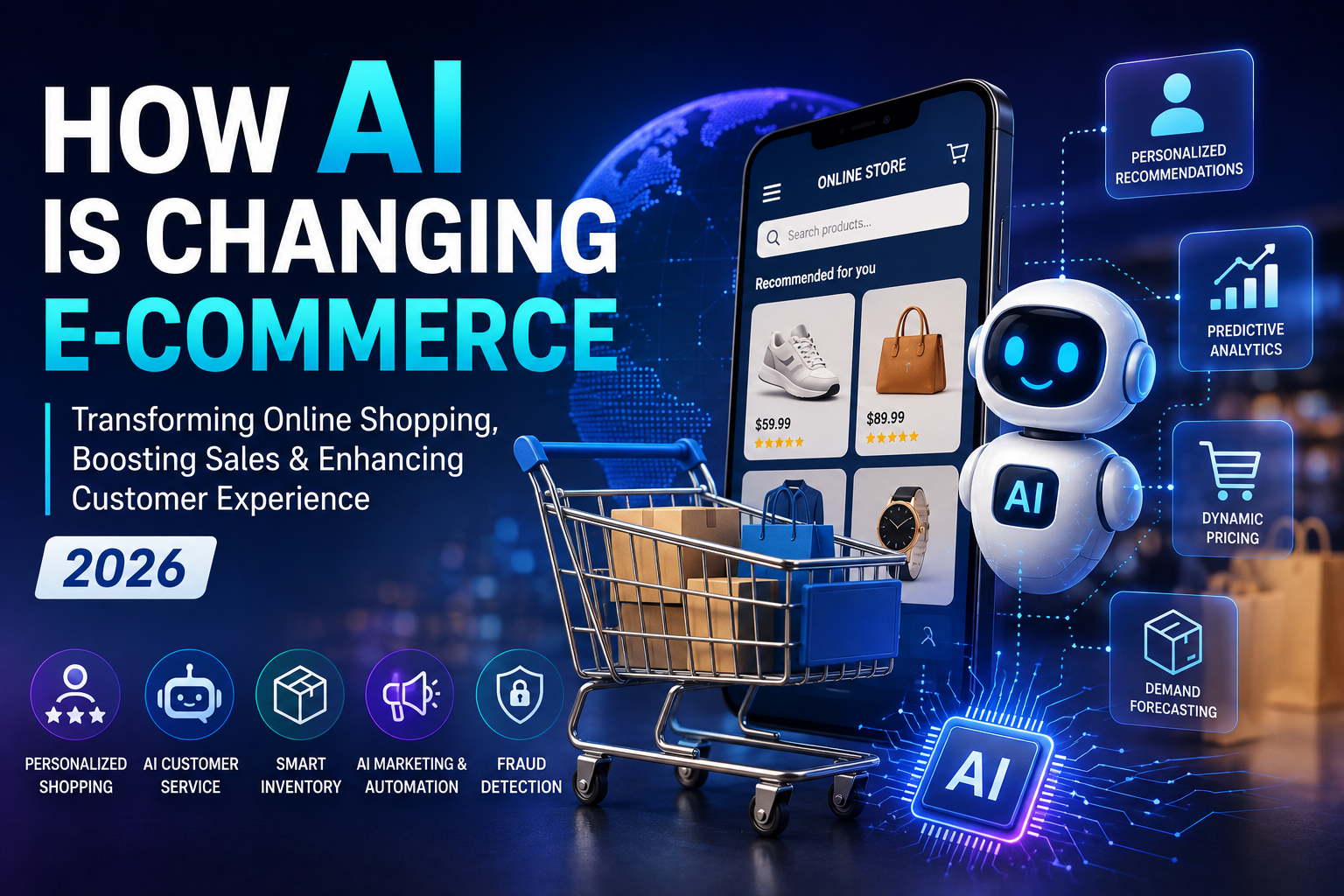
    Artificial intelligence is transforming the way people shop and the way online businesses sell products. From personalized recommendations to automated customer support, AI is helping e-commerce companies create faster, smarter, and more convenient shopping experiences.

    For U.S. retailers, understanding How AI Is Changing E-Commerce is becoming increasingly important. In 2026, businesses of all sizes—from small Shopify stores to large online marketplaces—are using AI to improve customer experiences, reduce operating costs, and increase sales.

    What Is AI in E-Commerce?

    AI in e-commerce refers to using artificial intelligence technologies to automate tasks, analyze customer data, predict trends, and improve online shopping experiences.

    Understanding How AI Is Changing E-Commerce starts with recognizing that AI can process large amounts of information much faster than humans. This allows online retailers to make data-driven decisions and respond to customer needs in real time.

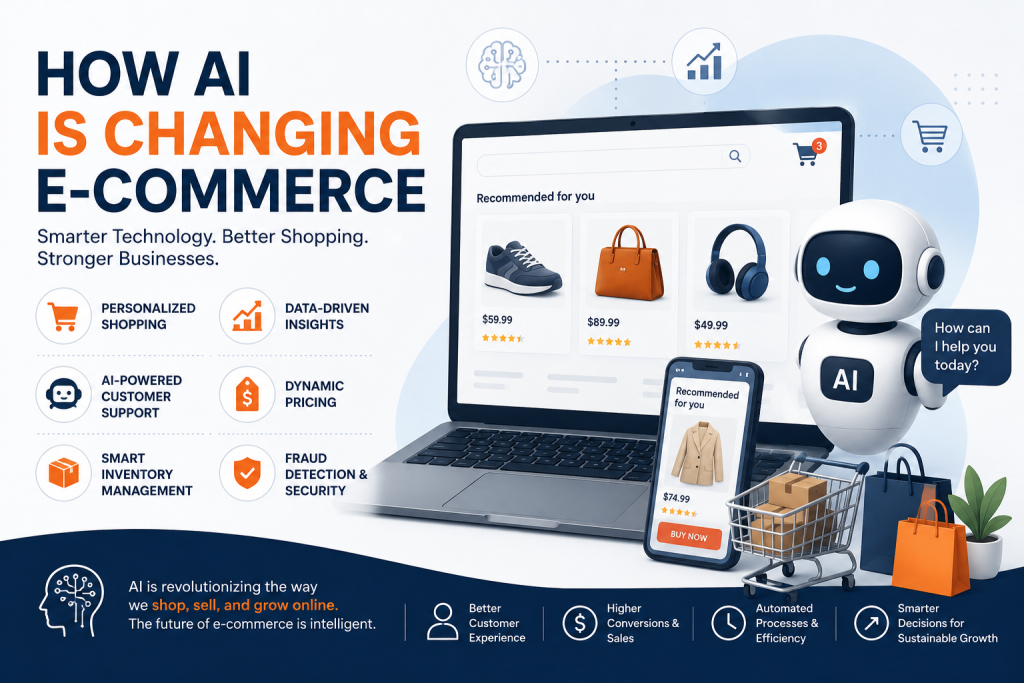
    AI is now being used for product recommendations, inventory management, fraud detection, pricing, marketing, customer service, and more.

    1. Personalized Shopping Experiences

    One of the biggest ways How AI Is Changing E-Commerce can be seen is through personalization.

    AI analyzes information such as:

    • Browsing history
    • Previous purchases
    • Search behavior
    • Product preferences
    • Shopping patterns

    Based on this information, online stores can recommend products that are more relevant to individual shoppers.

    For U.S. consumers, personalized experiences can make it easier to discover products and complete purchases without searching through hundreds of options.

    2. AI-Powered Customer Service

    Customer support is another major area where How AI Is Changing E-Commerce is becoming visible.

    AI chatbots and AI agents can answer questions 24/7, help customers track orders, explain return policies, recommend products, and handle common support requests.

    Instead of waiting for a human representative, customers can receive immediate assistance. Complex issues can then be transferred to human support teams.

    3. Smarter Inventory Management

    Managing inventory can be challenging for online retailers. Too much inventory increases storage costs, while insufficient stock can result in lost sales.

    AI helps businesses forecast demand by analyzing historical sales, seasonal trends, customer behavior, and market conditions.

    This is another important example of How AI Is Changing E-Commerce, because businesses can use predictive insights to determine when to reorder products and how much inventory they may need.

    4. AI-Driven Marketing

    Digital marketing is also changing rapidly because of AI.

    E-commerce businesses can use AI to automate:

    • Email marketing
    • Customer segmentation
    • Product recommendations
    • Ad targeting
    • Content creation
    • Promotional campaigns

    AI can identify customer groups and help marketers deliver more relevant messages. This can improve engagement while reducing the amount of manual work required by marketing teams.

    5. Dynamic Pricing

    Another important example of How AI Is Changing E-Commerce is dynamic pricing.

    AI systems can analyze demand, inventory levels, competitor pricing, seasonal trends, and other market signals to help retailers adjust prices.

    For example, an online store may increase discounts when demand is low or adjust pricing when inventory levels change.

    Businesses should still establish clear pricing rules and monitor automated systems to ensure pricing decisions remain appropriate and transparent.

    6. Better Fraud Detection

    Online retailers face risks from payment fraud, account takeovers, and suspicious transactions.

    AI can identify unusual purchasing patterns and flag potentially fraudulent activity. Instead of relying only on fixed rules, AI systems can analyze multiple signals to identify transactions that may require additional review.

    This helps businesses protect customers while reducing potential financial losses.

    7. AI-Powered Product Search

    AI is making product search more conversational and intuitive.

    Instead of typing a short keyword, shoppers can increasingly describe what they want in natural language. AI can interpret the request and identify products that match the shopper’s needs.

    Visual search is another emerging capability, allowing shoppers to use images to discover similar products.

    These technologies demonstrate How AI Is Changing E-Commerce by making product discovery faster and more natural.

    8. Improved E-Commerce Operations

    AI can also automate repetitive back-office tasks, including order processing, customer segmentation, forecasting, and reporting.

    By automating routine workflows, employees can spend more time on strategy, product development, and customer relationships.

    This is particularly valuable for small and mid-sized U.S. businesses that need to scale without significantly increasing administrative workloads.

    Benefits of AI for E-Commerce Businesses

    Understanding How AI Is Changing E-Commerce also means recognizing its major business benefits.

    Companies can potentially achieve:

    • Higher conversion rates
    • Better customer engagement
    • Faster customer support
    • More accurate demand forecasting
    • Reduced operational costs
    • Improved inventory management
    • More effective marketing
    • Better fraud prevention
    • Increased employee productivity

    However, businesses should implement AI strategically rather than automating every process without oversight.

    Challenges of Using AI in E-Commerce

    Despite its advantages, AI also creates challenges. Businesses must consider data privacy, cybersecurity, inaccurate AI outputs, implementation costs, and employee training.

    Companies should establish clear AI policies, protect customer information, monitor automated systems, and maintain human oversight for important decisions.

    The Future of AI in E-Commerce

    The future of How AI Is Changing E-Commerce will involve increasingly intelligent shopping assistants, AI agents, predictive analytics, automated marketing, conversational commerce, and highly personalized customer journeys.

    In 2026 and beyond, AI will likely become an important part of the technology stack for competitive online retailers.

    Businesses that adopt AI responsibly can improve efficiency while delivering more convenient experiences to customers.

    Final Thoughts

    How AI Is Changing E-Commerce is no longer simply a future concept. AI is already transforming product discovery, customer service, marketing, inventory management, fraud prevention, pricing, and everyday retail operations.

    For U.S. e-commerce businesses, adopting the right AI technologies can create opportunities to improve customer satisfaction, reduce costs, and compete more effectively. The key is to combine automation with strong data protection, human oversight, and a clear business strategy.

    Frequently Asked Questions

    How is AI changing e-commerce?

    AI is changing e-commerce through personalized recommendations, automated customer service, smarter inventory forecasting, AI-powered marketing, fraud detection, dynamic pricing, and conversational shopping.

    How does AI improve online shopping?

    AI can help shoppers find relevant products faster, receive personalized recommendations, get instant customer support, and discover products through conversational or visual search.

    Is AI useful for small e-commerce businesses?

    Yes. Small businesses can use affordable AI tools for customer support, marketing, product recommendations, content creation, analytics, and inventory management.

    What is the future of AI in e-commerce?

    The future includes AI shopping assistants, autonomous AI agents, conversational commerce, predictive analytics, personalized experiences, and increasingly automated e-commerce operations.