Tag: AI Cybersecurity

  • How to Secure AI Applications: The Complete Guide for Businesses in 2026

    How to Secure AI Applications: The Complete Guide for Businesses in 2026

    How to Secure AI Applications: The Complete Guide for Businesses in 2026

    Artificial intelligence (AI) is transforming industries by automating workflows, improving decision-making, and enhancing customer experiences. However, as AI adoption grows, organizations also face increasing cybersecurity threats. Understanding How to Secure AI Applications is essential for protecting sensitive data, preventing cyberattacks, and maintaining customer trust.

    Whether you’re a startup, small business, or enterprise in the United States, learning How to Secure AI Applications will help you build safer, more reliable AI systems in 2026 and beyond.


    What Does It Mean to Secure AI Applications?

    How to Secure AI Applications refers to implementing security measures that protect AI models, training data, APIs, infrastructure, and users from cyber threats. AI applications process large volumes of sensitive information, making them attractive targets for hackers.

    Securing AI applications involves preventing unauthorized access, detecting vulnerabilities, protecting data privacy, and ensuring AI systems operate safely and reliably.


    Why AI Application Security Matters

    Organizations that ignore How to Secure AI Applications risk exposing confidential business data, disrupting operations, and damaging their reputation.

    Common AI security threats include:

    • Data breaches
    • Prompt injection attacks
    • AI model theft
    • Adversarial attacks
    • API vulnerabilities
    • Insider threats
    • Malware targeting AI systems
    • Unauthorized access

    Implementing strong AI security measures reduces these risks and supports long-term business success.


    Best Practices: How to Secure AI Applications

    1. Encrypt Sensitive Data

    One of the most important steps in How to Secure AI Applications is protecting sensitive data with encryption.

    Businesses should encrypt:

    • Customer information
    • Financial records
    • Training datasets
    • AI model outputs
    • Cloud storage

    Encryption keeps data secure even if unauthorized access occurs.


    2. Implement Strong Authentication

    Use robust authentication methods to limit access to AI systems.

    Recommended security controls include:

    • Multi-Factor Authentication (MFA)
    • Strong password policies
    • Single Sign-On (SSO)
    • Role-Based Access Control (RBAC)

    Only authorized users should access critical AI resources.


    3. Secure AI APIs

    Many AI applications communicate through APIs, making them common attack targets.

    Protect APIs by:

    • Using secure authentication tokens
    • Limiting API requests
    • Encrypting communications
    • Monitoring API traffic
    • Blocking suspicious activity

    API protection is essential when learning How to Secure AI Applications.


    4. Monitor AI Systems Continuously

    Real-time monitoring helps organizations detect threats before they become serious incidents.

    Monitor for:

    • Unusual login attempts
    • Unexpected AI outputs
    • Unauthorized model changes
    • Network anomalies
    • Data access patterns

    Continuous monitoring improves overall cybersecurity.


    5. Protect AI Models

    AI models represent valuable intellectual property.

    Organizations should:

    • Restrict model access
    • Prevent unauthorized downloads
    • Validate model integrity
    • Maintain secure backups
    • Monitor for model tampering

    Protecting AI models is a critical part of How to Secure AI Applications.


    6. Train Employees

    Human error remains one of the biggest cybersecurity risks.

    Provide training on:

    • AI phishing attacks
    • Prompt injection threats
    • Secure password practices
    • Responsible AI usage
    • Data privacy

    Well-trained employees strengthen organizational security.


    7. Perform Regular Security Audits

    Routine audits identify vulnerabilities before attackers exploit them.

    Businesses should:

    • Conduct penetration testing
    • Review access logs
    • Assess AI infrastructure
    • Update security policies
    • Verify regulatory compliance

    Regular assessments improve long-term resilience.
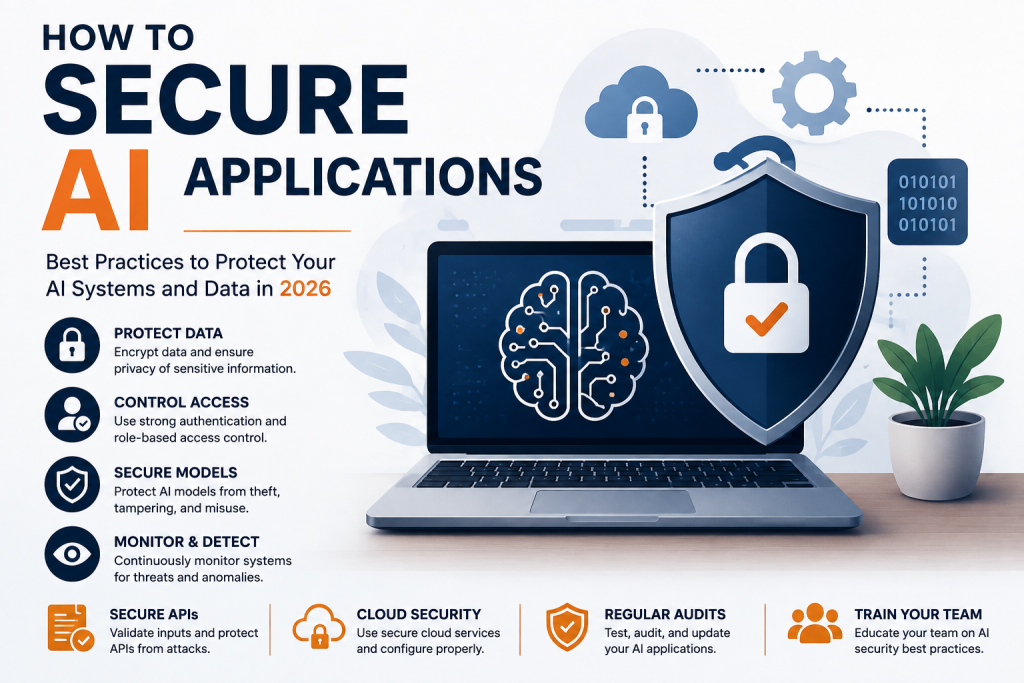

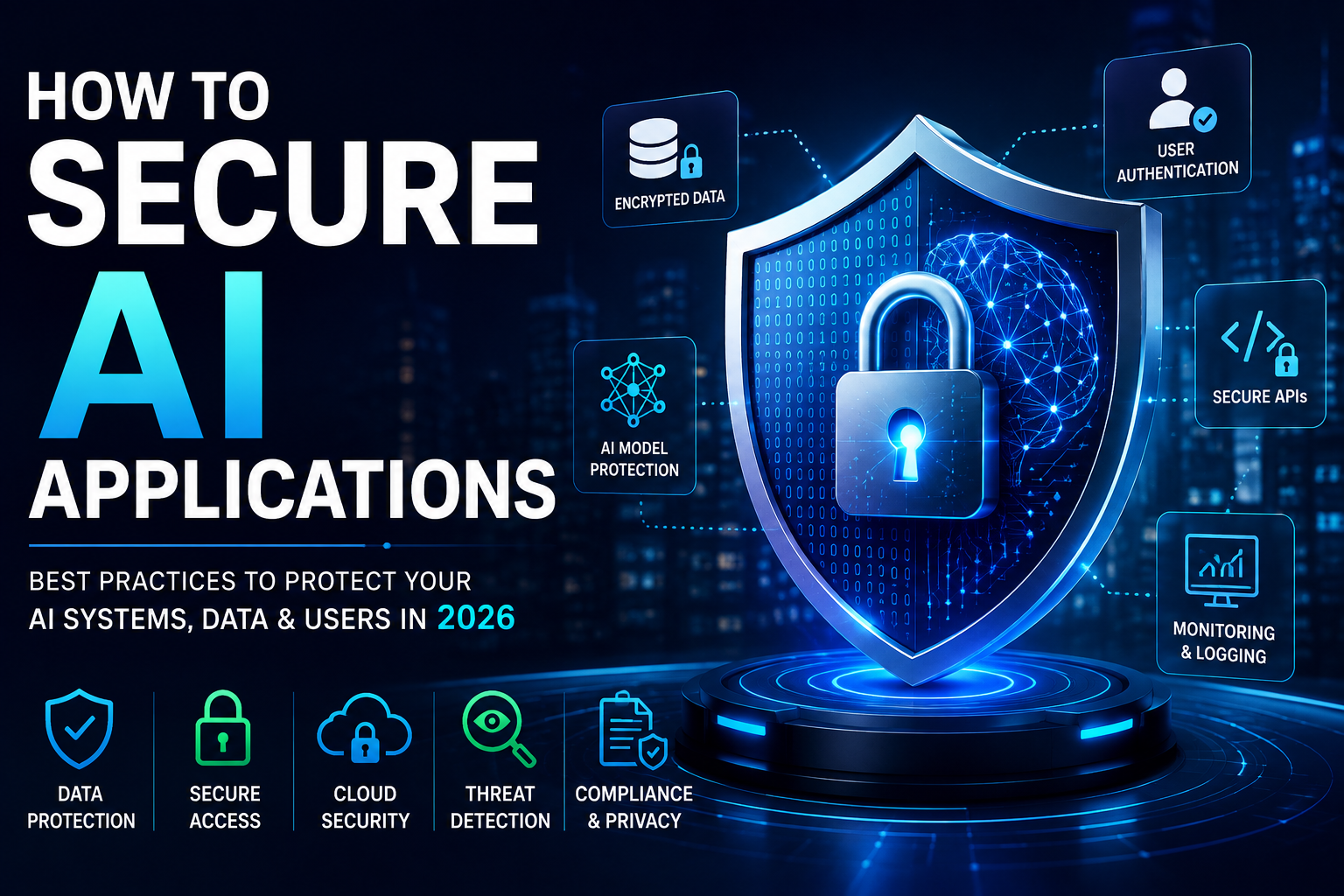
    This feature image represents How to Secure AI Applications with a modern cybersecurity and artificial intelligence theme. At the center, a glowing AI-powered security shield with a digital lock symbolizes strong protection against cyber threats. The shield surrounds an advanced AI neural network, representing secure machine learning and intelligent systems.

Around the central shield are key cybersecurity elements, including Encrypted Data, AI Model Protection, User Authentication, Secure APIs, Monitoring & Logging, Cloud Security, Threat Detection, and Compliance & Privacy. These components highlight the essential practices businesses should implement to secure AI applications and protect sensitive information.

The futuristic blue and neon color palette conveys trust, innovation, and enterprise-level security, making this image ideal for articles about AI application security, AI cybersecurity, machine learning security, data protection, secure AI development, and business AI best practices in 2026. It visually communicates the importance of protecting AI systems, safeguarding user data, and building resilient AI-powered applications against evolving cyber threats.

    Benefits of Securing AI Applications

    Organizations implementing How to Secure AI Applications gain significant advantages.

    Key benefits include:

    • Better data protection
    • Reduced cyber risks
    • Increased customer trust
    • Stronger regulatory compliance
    • Improved business continuity
    • Higher operational reliability
    • Enhanced AI performance
    • Lower financial losses

    Strong AI security creates a competitive advantage in today’s digital economy.


    Industries That Need AI Security

    Many industries rely heavily on AI and require robust protection.

    Examples include:

    • Healthcare
    • Banking
    • Financial Services
    • E-commerce
    • Retail
    • Manufacturing
    • Government
    • Education
    • Insurance
    • Technology

    Each industry processes sensitive information that must remain secure.


    Future Trends in AI Application Security

    As cyber threats evolve, businesses must continue improving How to Secure AI Applications using modern technologies.

    Emerging trends include:

    • Zero Trust Architecture
    • AI-powered threat detection
    • Privacy-preserving AI
    • Secure AI governance
    • Automated compliance monitoring
    • Explainable AI
    • Confidential computing

    These innovations will shape AI security throughout 2026 and beyond.


    Final Thoughts

    Understanding How to Secure AI Applications is essential for organizations adopting artificial intelligence. From encrypting sensitive data and protecting AI models to securing APIs and training employees, proactive security measures reduce cyber risks and improve business resilience.

    Businesses that prioritize How to Secure AI Applications will strengthen customer trust, meet compliance requirements, and confidently expand their AI capabilities in the years ahead.


    Frequently Asked Questions

    How to Secure AI Applications?

    Organizations can secure AI applications by encrypting data, implementing Multi-Factor Authentication, protecting APIs, monitoring AI systems, securing AI models, training employees, and conducting regular security audits.

    Why is AI application security important?

    AI application security protects sensitive data, prevents cyberattacks, ensures regulatory compliance, and maintains customer trust.

    What are common AI security threats?

    Common threats include data breaches, prompt injection attacks, adversarial attacks, API vulnerabilities, model theft, insider threats, and unauthorized access.

    Who should secure AI applications?

    Any organization using AI—including healthcare providers, financial institutions, e-commerce companies, government agencies, and technology firms—should implement strong AI security practices.
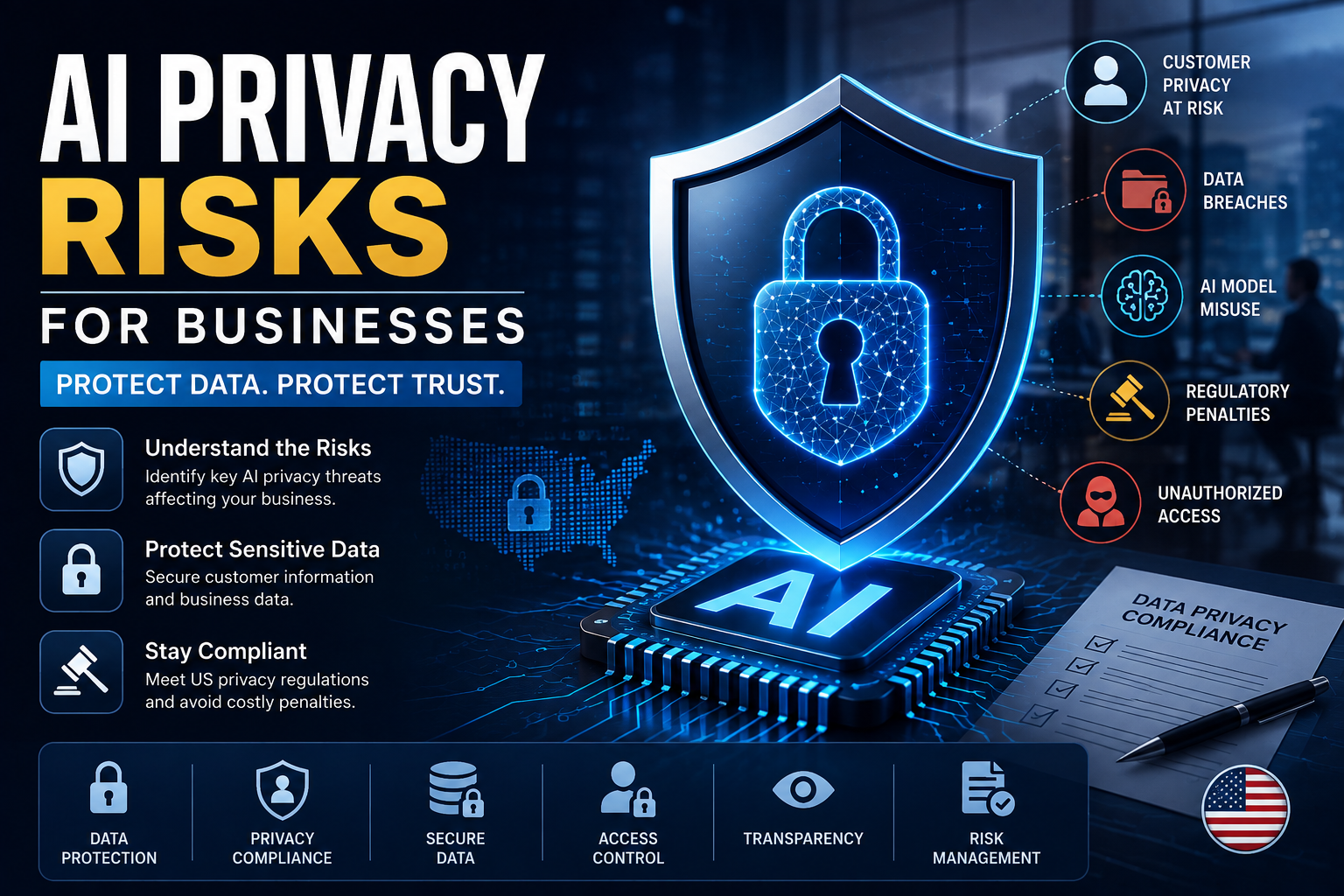
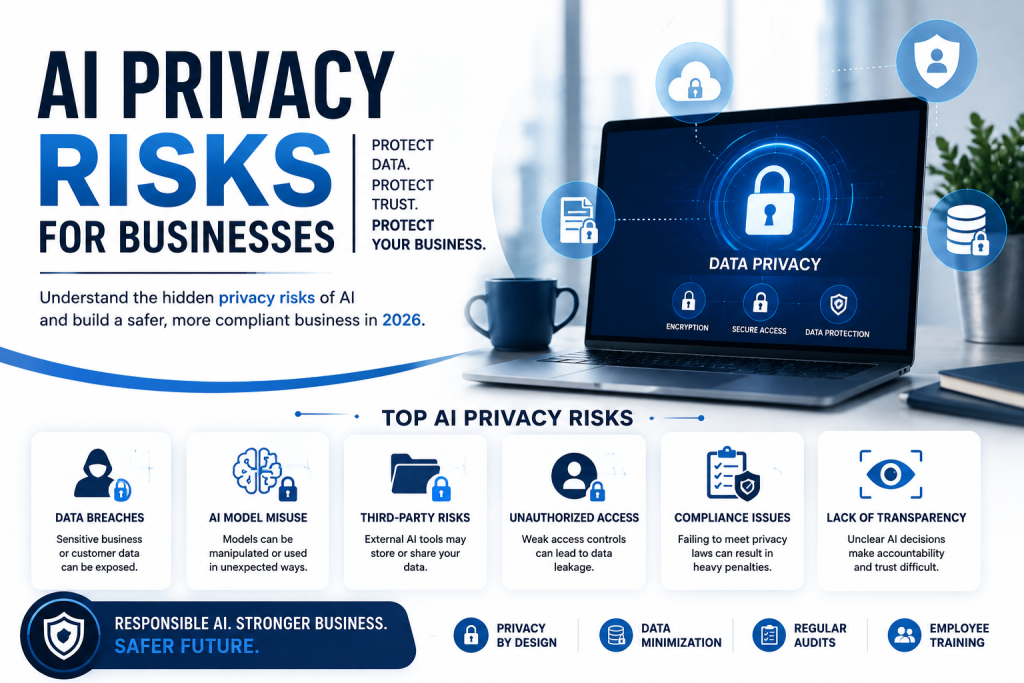
  • AI Privacy Risks for Businesses: How to Protect Sensitive Data in 2026

    AI Privacy Risks for Businesses: How to Protect Sensitive Data in 2026

    AI Privacy Risks for Businesses: How to Protect Sensitive Data in 2026

    Artificial intelligence (AI) is transforming how businesses operate, from customer service and marketing to data analysis and automation. While AI offers remarkable benefits, it also introduces significant privacy concerns. Understanding AI Privacy Risks for Businesses is essential for protecting customer information, maintaining regulatory compliance, and building trust in today’s digital economy.

    Whether you’re a startup, small business, or large enterprise in the United States, learning about AI Privacy Risks for Businesses can help you reduce security vulnerabilities and prepare for the future of AI in 2026.


    What Are AI Privacy Risks for Businesses?

    AI Privacy Risks for Businesses refer to the potential threats that arise when AI systems collect, process, store, or analyze sensitive personal and business data. AI models often rely on massive datasets to improve performance, making data privacy one of the biggest concerns for organizations.

    Without proper safeguards, businesses may expose confidential information, violate privacy laws, or suffer costly cyberattacks.


    Why AI Privacy Matters

    As organizations increasingly adopt AI technologies, protecting sensitive information has become a top priority. Ignoring AI Privacy Risks for Businesses can result in financial losses, legal penalties, and reputational damage.

    Some common privacy concerns include:

    • Unauthorized access to customer data
    • Data breaches
    • AI model misuse
    • Employee data exposure
    • Third-party data sharing
    • Identity theft
    • Compliance violations
    • Loss of customer trust

    Addressing these issues early helps businesses create a secure AI environment.


    Common AI Privacy Risks for Businesses

    1. Data Breaches

    One of the biggest AI Privacy Risks for Businesses is unauthorized access to sensitive data. Cybercriminals often target AI systems because they contain valuable customer information, financial records, and proprietary business data.

    Businesses should encrypt sensitive information and monitor access continuously.


    2. AI Model Data Leakage

    AI models can unintentionally reveal confidential information if they are trained on sensitive datasets without proper privacy controls.

    Organizations should carefully manage training data and remove personally identifiable information (PII) whenever possible.


    3. Third-Party AI Tools

    Many companies rely on external AI platforms to improve productivity. However, uploading confidential documents to third-party AI services can create additional AI Privacy Risks for Businesses.

    Always review vendor security policies before sharing sensitive information.


    4. Employee Misuse

    Employees may unknowingly expose confidential business information by entering proprietary data into public AI tools.

    Regular cybersecurity awareness training helps reduce human error and protects company assets.


    5. Regulatory Compliance Challenges

    Businesses operating in the United States must comply with privacy regulations such as state privacy laws and industry-specific standards.

    Following compliance requirements reduces legal risks and improves customer confidence.


    Best Practices to Reduce AI Privacy Risks

    Organizations can minimize AI Privacy Risks for Businesses by implementing strong privacy and security measures.

    Protect Sensitive Data

    Encrypt customer information both during transmission and while stored.

    Limit Data Collection

    Only collect the information necessary for business operations.

    Implement Access Controls

    Use Multi-Factor Authentication (MFA) and Role-Based Access Control (RBAC) to restrict access to sensitive systems.

    Audit AI Systems Regularly

    Monitor AI models for unusual behavior and review privacy controls on a routine basis.

    Train Employees

    Educate staff about AI privacy, phishing attacks, and responsible AI usage.

    Choose Trusted AI Vendors

    Partner with AI providers that prioritize security, transparency, and regulatory compliance.


    Benefits of Strong AI Privacy Protection

    Businesses implementing effective privacy strategies gain several competitive advantages.

    Key benefits include:

    • Increased customer trust
    • Better regulatory compliance
    • Reduced risk of data breaches
    • Stronger cybersecurity
    • Improved brand reputation
    • Lower financial risks
    • Safer AI adoption
    • Enhanced business resilience

    These advantages make privacy protection a critical investment for organizations using AI.


    Industries Most Affected

    Several industries face higher AI Privacy Risks for Businesses because they process sensitive customer information.

    These industries include:

    • Healthcare
    • Financial Services
    • E-commerce
    • Insurance
    • Education
    • Legal Services
    • Government
    • Human Resources
    • Retail
    • Technology

    Businesses in these sectors should implement advanced privacy controls to protect sensitive information.


    The Future of AI Privacy in 2026

    As AI technology continues to evolve, organizations must strengthen their privacy strategies. Future trends related to AI Privacy Risks for Businesses include:

    • Privacy-preserving AI
    • Federated learning
    • Zero Trust security
    • AI governance frameworks
    • Automated compliance monitoring
    • Secure AI model development
    • Advanced encryption technologies

    Companies that invest in responsible AI practices today will be better prepared for tomorrow’s regulatory and cybersecurity challenges.


    Final Thoughts

    Understanding AI Privacy Risks for Businesses is essential for any organization using artificial intelligence. From protecting customer information and preventing data breaches to maintaining regulatory compliance, strong privacy practices help businesses safely adopt AI technologies.

    As AI becomes more integrated into everyday operations throughout 2026, organizations that prioritize privacy, transparency, and cybersecurity will earn greater customer trust and achieve long-term success.


    Frequently Asked Questions

    What are AI Privacy Risks for Businesses?

    AI Privacy Risks for Businesses are threats related to the collection, storage, processing, and sharing of sensitive information by AI systems, potentially leading to data breaches, compliance issues, and unauthorized access.

    Why is AI privacy important?

    AI privacy protects customer information, ensures compliance with regulations, prevents cyberattacks, and helps businesses maintain trust and credibility.

    How can businesses reduce AI privacy risks?

    Businesses can encrypt sensitive data, limit data collection, implement access controls, audit AI systems regularly, train employees, and use trusted AI vendors.

    Which industries face the highest AI privacy risks?

    Healthcare, finance, e-commerce, education, legal services, government, retail, and technology organizations often handle sensitive data and require stronger AI privacy protections.

  • AI Security Best Practices: The Ultimate Guide to Protecting Your Business in 2026

    AI Security Best Practices: The Ultimate Guide to Protecting Your Business in 2026

    AI Security Best Practices: The Ultimate Guide to Protecting Your Business in 2026

    Focus Keyword: AI Security Best Practices

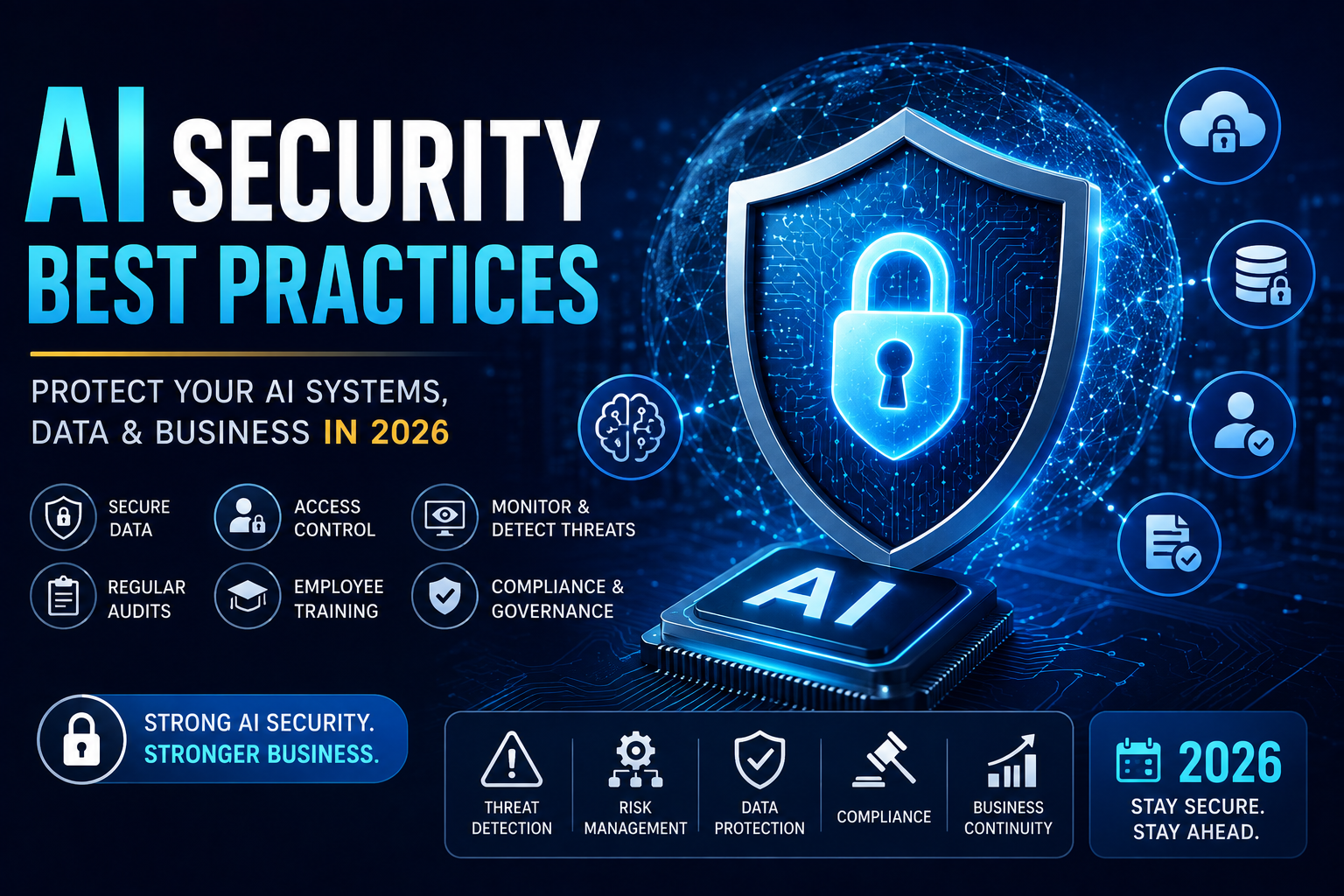
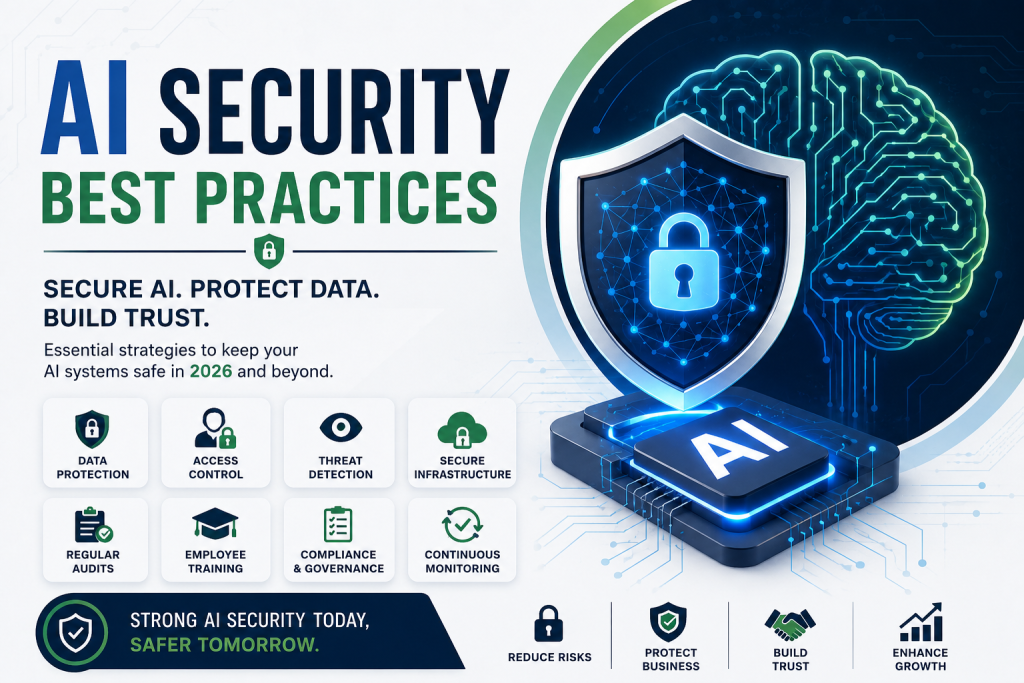
    Artificial intelligence (AI) is transforming businesses across the United States by improving productivity, automating workflows, and enhancing customer experiences. However, as AI adoption grows, so do cybersecurity risks. Understanding AI Security Best Practices is essential for organizations that want to protect sensitive data, AI models, and business operations from evolving cyber threats.

    In this guide, you’ll learn the most effective AI Security Best Practices, common AI security risks, and actionable strategies to secure your AI systems in 2026 and beyond.


    What Are AI Security Best Practices?

    AI Security Best Practices are a set of guidelines and strategies designed to protect AI systems, machine learning models, and sensitive data from cyberattacks, unauthorized access, and misuse. These practices help businesses build secure, reliable, and trustworthy AI applications while complying with industry regulations.

    As organizations increasingly rely on AI for decision-making and automation, implementing strong security measures has become a business necessity.


    Why AI Security Matters

    Cybercriminals are constantly developing new techniques to exploit AI systems. Businesses that ignore AI Security Best Practices may face data breaches, financial losses, legal penalties, and reputational damage.

    Some of the biggest AI security threats include:

    • Data breaches
    • Model theft
    • Prompt injection attacks
    • AI-generated phishing scams
    • Adversarial attacks
    • Insider threats
    • Malware powered by AI
    • Unauthorized access

    Following AI Security Best Practices helps organizations reduce these risks while maintaining customer trust.


    Top AI Security Best Practices

    1. Protect Sensitive Data

    Data is the foundation of every AI model. Encrypt sensitive customer information both in transit and at rest to prevent unauthorized access.

    Businesses should also implement strict data access controls and regularly audit their databases.


    2. Implement Strong Access Controls

    One of the most important AI Security Best Practices is limiting access to AI systems.

    Use:

    • Multi-Factor Authentication (MFA)
    • Role-Based Access Control (RBAC)
    • Strong password policies
    • Least privilege access

    Only authorized users should be able to modify AI models or access confidential data.


    3. Regularly Update AI Models

    AI software should never remain outdated.

    Regular updates help:

    • Patch vulnerabilities
    • Improve model accuracy
    • Enhance security
    • Prevent exploitation

    Keeping AI models current is one of the simplest yet most effective AI Security Best Practices.


    4. Monitor AI Systems Continuously

    Continuous monitoring helps organizations detect unusual behavior before it becomes a major security incident.

    Use AI monitoring tools to identify:

    • Suspicious user activity
    • Unauthorized access attempts
    • Model manipulation
    • Abnormal outputs

    Real-time monitoring strengthens overall cybersecurity.


    5. Secure APIs

    Many AI applications rely on APIs to communicate with other systems.

    Protect APIs by:

    • Using authentication tokens
    • Encrypting API traffic
    • Limiting API requests
    • Monitoring API activity

    API security is a critical part of AI Security Best Practices.


    6. Validate AI Outputs

    Generative AI can occasionally produce inaccurate or misleading responses.

    Organizations should:

    • Review AI-generated content
    • Verify important information
    • Test outputs regularly
    • Maintain human oversight

    Human review significantly reduces operational risks.


    7. Train Employees on AI Security

    Employees are often the weakest link in cybersecurity.

    Provide regular training on:

    • AI phishing scams
    • Prompt injection attacks
    • Safe AI usage
    • Password security
    • Data privacy

    Employee awareness is one of the most effective AI Security Best Practices for reducing human error.


    8. Conduct Regular Security Audits

    Routine security assessments help identify weaknesses before attackers exploit them.

    Businesses should:

    • Perform penetration testing
    • Audit AI infrastructure
    • Review access logs
    • Assess compliance requirements

    Regular audits improve long-term AI resilience.


    Benefits of AI Security Best Practices

    Organizations implementing AI Security Best Practices enjoy numerous advantages.

    Key benefits include:

    • Stronger cybersecurity
    • Better customer trust
    • Reduced risk of data breaches
    • Improved regulatory compliance
    • Secure AI deployments
    • Higher business continuity
    • Lower financial losses
    • Increased operational confidence

    These benefits make AI security a strategic investment for businesses of all sizes.


    Common AI Security Challenges

    Despite rapid advancements, organizations still face several challenges.

    Common issues include:

    • Data poisoning attacks
    • Prompt injection vulnerabilities
    • AI hallucinations
    • Model inversion attacks
    • Third-party software risks
    • Privacy concerns
    • Regulatory compliance

    Understanding these risks helps businesses improve their AI security posture.


    The Future of AI Security in 2026

    The future of AI Security Best Practices will focus on proactive defense strategies rather than reactive security measures.

    Emerging trends include:

    • AI-powered threat detection
    • Zero Trust security architecture
    • Privacy-preserving AI
    • Explainable AI
    • Secure AI governance
    • Automated incident response
    • Advanced identity verification

    Businesses adopting these technologies will be better prepared for increasingly sophisticated cyber threats.


    Final Thoughts

    As AI becomes an essential part of modern business, implementing AI Security Best Practices is no longer optional. Organizations must secure their AI systems, protect sensitive data, monitor AI models, and educate employees about evolving cyber risks.

    Whether you’re a small business, enterprise, or startup in the United States, investing in AI Security Best Practices will help safeguard your operations, maintain customer trust, and ensure long-term success in the AI-driven future.


    Frequently Asked Questions

    What are AI Security Best Practices?

    AI Security Best Practices are strategies that protect AI systems, machine learning models, and sensitive data from cyber threats, unauthorized access, and misuse.

    Why is AI security important?

    AI security helps prevent data breaches, model theft, cyberattacks, and compliance violations while protecting business operations and customer information.

    What are common AI security risks?

    Common risks include prompt injection attacks, data poisoning, adversarial attacks, AI phishing, model theft, insider threats, and unauthorized access.

    How can businesses improve AI security?

    Businesses should encrypt sensitive data, implement multi-factor authentication, monitor AI systems, secure APIs, update AI models regularly, conduct security audits, and train employees on cybersecurity best practices.